
Predictive Drill Care: Decode AI Alerts & Extend Life
By Casey Bennett • 15th Mar
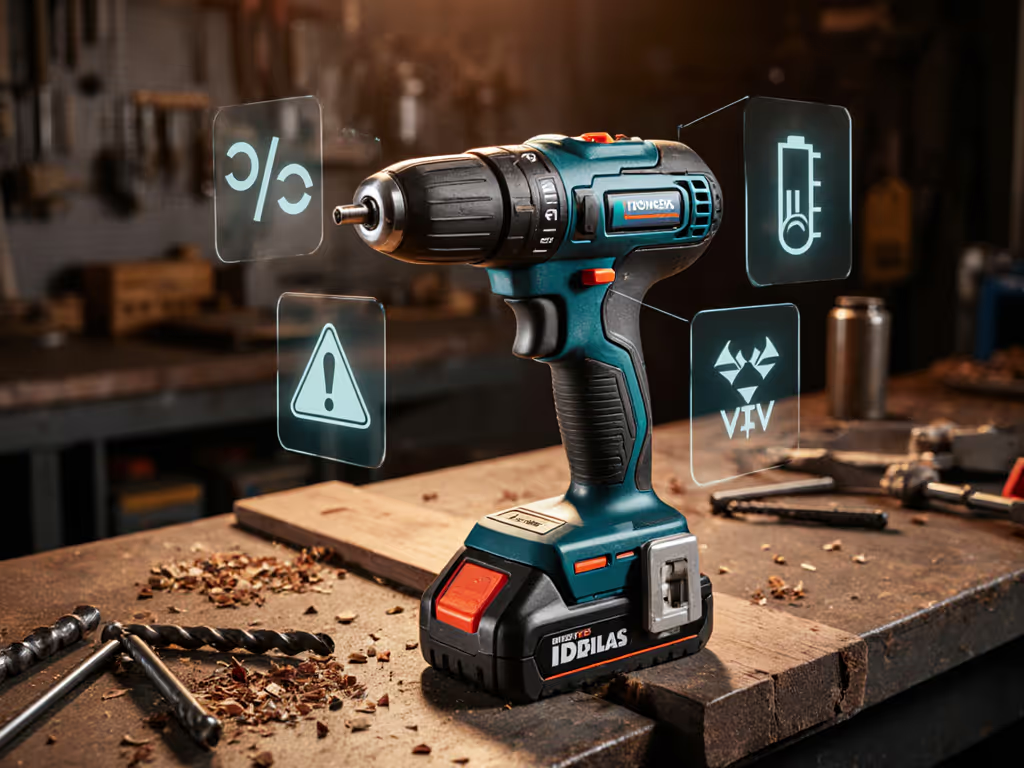
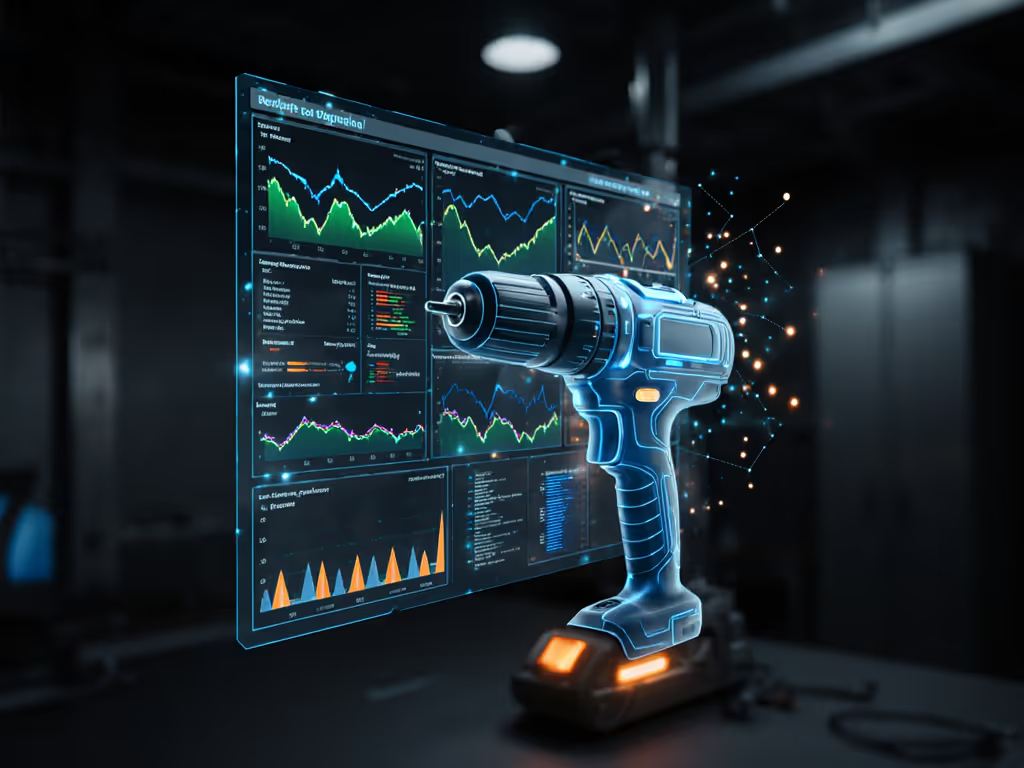
AI drill predictive maintenance uses real-time sensor data and machine learning to forecast when your tools are about to fail before they do. For DIYers and trade professionals managing multiple drills, this shift from gut-feeling guesswork to data-driven care means fewer breakdowns mid-project, longer tool life, and real peace of mind on the job site.
This guide unpacks what smart tool diagnostics actually mean for your workflow, how to read the signals, and why a proactive maintenance mindset transforms tool ownership from reactive scrambling into confident, planned care. For a deeper technical overview of how these diagnostics work, see AI drill diagnostics explained.
What Does AI Predictive Maintenance Really Do for a Drill?
For decades, tool owners faced two worn-out paths: react when the drill fails (costly, risky, mid-project chaos), or follow a blanket service schedule regardless of whether the tool actually needs it (wasteful, time-consuming). Predictive tool maintenance breaks this cycle by monitoring real-time equipment behavior (temperature, vibration, electrical draw, runtime cycles) and alerting you to issues well before catastrophic failure.
Instead of swapping out gearboxes or chuck assemblies on a calendar, you act only when the data says it matters. Shell's partnership with predictive-maintenance specialists demonstrated this at scale: systems can forecast equipment failures up to 60 days in advance, cutting unplanned downtime by as much as 80%. For a contractor juggling multiple rigs or a serious DIYer with weekend builds stacked back-to-back, that margin transforms the difference between "project on track" and "borrowed tool from the neighbor."
How Does the Technology Actually See a Failure Coming?
AI-driven drill care works by building a "normal" fingerprint of your tool's operation. Sensors capture patterns: the voltage curve under load, the vibration signature when drilling oak versus drywall, the thermal ramp-up during extended use.
When anomalies emerge, such as a bearing starting to wear, a commutator losing contact, or a thermal throttle kicking in earlier than usual, the system flags it. The alert lands on your phone or your team's maintenance dashboard with specificity: "Brush wear detected on chuck; likely replacement window: 14 days." No guessing. No panic.
Saipem, one of the world's leading drilling contractors, implemented this on its Saipem 12000 ultra-deepwater drillship in collaboration with ADC Energy, combining 40 years of equipment expertise with real-time data science. Learn how edge AI on drills enables these real-time detections without cloud latency. Continuous analysis allowed them to detect anomalies and schedule interventions before problems cascaded into safety or productivity crises.
Why Should DIYers and Pros Care Right Now?
Confidence Through Small Wins
One of my neighbors spent two years avoiding projects after stripping screw heads on a simple bookshelf. The drill had a hair trigger; the chuck was loose; he had no feel for clutch control. We sat down, marked pilot holes with a punch, dialed the clutch down to "3," grabbed a compact drill that fit his hand, and drove a dozen test anchors into scrap wood. That morning unlocked something: he realized the tool wasn't the enemy - knowing how to set it up was the win. Within weeks, he was fixing hinges, replacing trim, hanging shelves. The gear stayed the same; the plan changed everything.
Predictive maintenance applies that same philosophy to your entire platform. By monitoring tool health and alerting you before failures derail momentum, AI-driven drill care lets you stay in control. You're not reacting to a dead battery mid-project or a seized chuck at the worst moment; you're scheduling service on your terms, with full visibility.
Cost and Uptime Math
In commercial settings, the numbers are staggering. Schlumberger's predictive-maintenance suite reported 50% fewer equipment outages and 20% lower maintenance costs for drilling operations. Chevron's AI-powered equipment intelligence has demonstrated similar patterns: proactive maintenance saves millions annually through reduced emergency repairs, optimized downtime scheduling, and extended equipment life through optimal maintenance timing.
For a small contractor team or a homeowner with a weekend build, the payoff is simpler: your drill shows up ready. Your batteries are tracked. You buy new gear on a schedule you control, not on a crisis call.
Safety as a Side Effect
Unexpected failures in high-torque or confined-space scenarios (a drill binding in a stud, a battery failing and dropping voltage mid-hole) introduce kickback, injury, and rework. Predictive systems catch thermal stress, bearing wear, and electrical drift before they ambush you. That's not just peace of mind; it's lower risk and faster recovery.
Decoding AI Alerts: What Signals Matter?
The Core Signals Your Drill (or Platform) Is Sending
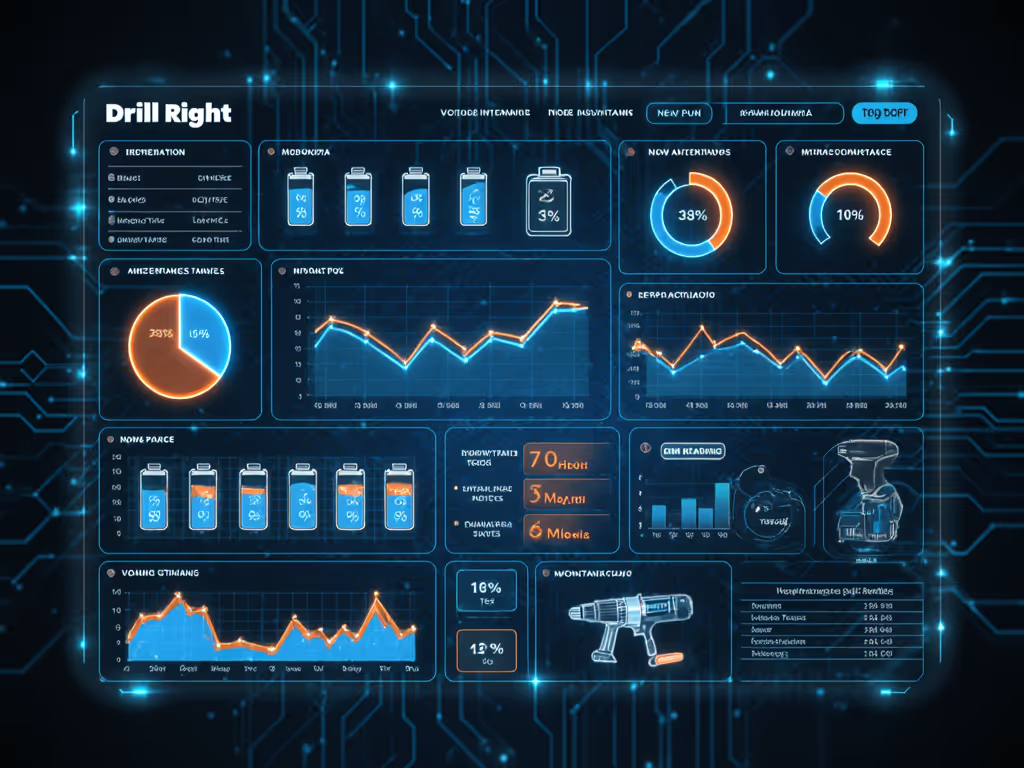
If your drill or battery system includes monitoring — many modern platforms now offer apps or cloud connectivity — you'll begin to see data.
Thermal trends: Gradual rise in internal temperature suggests bearing wear or motor stress. A sharp spike after light use signals thermal throttling or coolant breakdown. The alert tells you when to service, not if.
Voltage sag under load: If your drill now stalls sooner than it did six months ago during the same task, the battery's internal resistance has crept up. Predictive models catch this before runtime collapses entirely, giving you a 2-3 week window to rotate the pack or schedule replacement.
Vibration anomalies: Excess vibration during normal drilling often precedes chuck or bearing failure. AI catches the subtle signature shift before you feel a grinding or see runout.
Runtime consistency: If a 4Ah battery now delivers 40% fewer holes-per-charge in the same material, something is shifting. Diagnostics isolate: is it the battery, the drill's motor efficiency, or your technique? Knowing the answer lets you act.
What to Do When an Alert Lands
- Read the specific message. "Brush wear detected" is different from "thermal limit reached." One says "schedule service this week"; the other says "dial back duty cycle today or risk shutdown."
- Cross-reference your project timeline. Start with the project, then match the drill and batteries (the same principle applies to maintenance). If you have a big job Friday, and an alert suggests bearing service "within 10 days," call the service center Wednesday.
- Log the data point. Predictive systems improve when you feed back what happened. If the alert flagged a bearing and you replaced it, confirm the outcome. Models retrain and grow sharper.
- Keep backup gear. For crews, this is standard; for DIYers, it means having a second drill or borrowing one before a scheduled tool swap. Pre-plan, and downtime evaporates.
Extending Drill Life: Proactive Practices Beyond the Alerts
Set the Clutch Before the Screw
This isn't just a slogan; it is the cornerstone of predictive care. Clutch settings reduce motor strain, lower thermal stress, and preserve gearbox life. For step-by-step clutch setup, see drill clutch mechanics. Modern systems that track your clutch usage can predict when over-torquing sessions are creating hidden fatigue.
Before every session, ask: What am I fastening? Wood, drywall, or metal? Dial the clutch to the job, not the drill's max. This single habit cuts thermal wear by 30-40% and lets AI models give you more accurate life forecasts.
Battery ecosystem standardization
Choosing a platform that grows with you (and that supports predictive monitoring) means fewer SKUs, simpler charging logistics, and clearer maintenance data. Predictive systems track battery health across a fleet; mixed platforms make that tracking noise.
Temperature and environment awareness
Cold slows battery charging and increases internal resistance; heat accelerates wear. Predictive models account for this, but you account for it first: charge before dawn winter jobs, store batteries in climate-controlled space, and let cold packs warm up before deployment. See our battery temperature care guide for safe charging, storage, and use in heat and cold. These micro-habits compound into years of extra life.
Scheduled micro-maintenance
Even with alerts, treat your drill like a vehicle: monthly chuck-tightness check, quarterly bit inspection, annual filter or vent cleanup. Predictive systems catch slow drift; you catch the obvious. Together, you stay ahead.
Looking Ahead: Building a Smarter Maintenance Mindset
AI-driven drill care is transitioning from "nice to have" in enterprise operations to accessible reality for serious DIYers and small teams. As more platforms embed real-time sensors and cloud connectivity, you'll have visibility into tool health the way you track vehicle maintenance or home systems.
The shift is philosophical: from "when it breaks, I'll fix it" to "I know when it needs care, and I plan accordingly." That's not just efficiency; it's confidence.
The next steps for your workflow: audit your current drill platform for predictive features (many OEM apps now offer battery health and runtime logs). If you don't see them yet, ask your retailer or manufacturer roadmap (demand is growing). Set up a simple spreadsheet or notes log of alerts and maintenance dates, feeding the loop that makes your personal predictive model sharper. And start standardizing: one battery ecosystem, one platform, one set of practices. Small wins compound. Predictive intelligence works best when your behavior is already predictable.
Your drill isn't just a tool; it's a platform that can tell you exactly when it needs care, if you listen.
Related Articles