7 Best Greenhouse Construction Drills For Wet Climates
By Jordan Reyes • 17th May
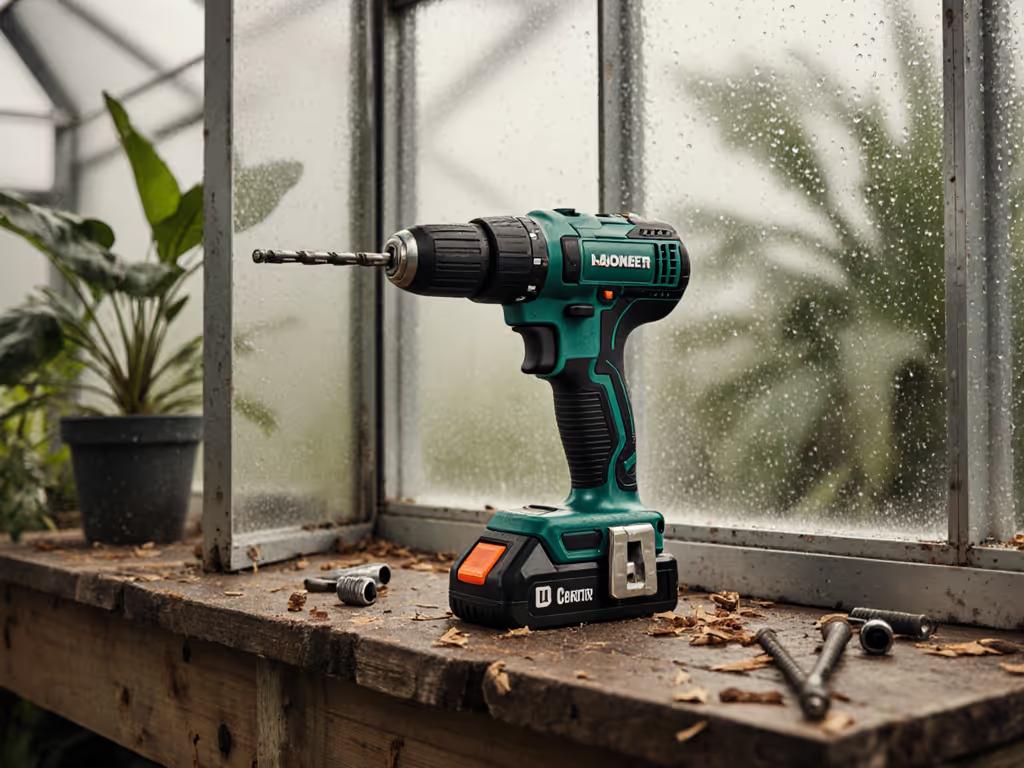
If you're building or maintaining a structure in a damp, coastal, or high-condensation environment, choosing the right greenhouse construction drill is as important as picking the glazing or foundation. In wet climates, drills effectively become agricultural power tools: they live in sheds, see mud, condensation, and cold starts, and still need to drive structural screws all day without bogging down.
Let's talk holes-per-charge and under-load speed, not brochure RPM. For seasonal runtime planning, see our holes-per-charge guide.
This guide breaks down seven cordless drills that stay productive when everything around them is wet, cold, and slippery. I'll translate the specs into:
- How they actually drill treated lumber and steel under load
- What you can expect for holes-per-charge in typical greenhouse work
- How well their sealing and electronics handle wet, foggy conditions
- Which battery ecosystem makes sense if you're building toward broader sustainable agriculture equipment (fans, pumps, trimmers, etc.)
What Matters Most for Drills in Wet Greenhouse Environments
Before we get into the list, it's worth aligning on the real-world constraints of greenhouse and farm structures.
Typical tasks:
- Lag-bolting and screwing treated posts and sill plates
- Framing doors, vents, and internal benches
- Glass and polycarbonate drilling for fixtures (carefully, with the right bits)
- Installing hardware, shade systems, and irrigation hangers into steel or aluminum framing
- Ongoing repairs: replacing panels, tightening fasteners, and other garden structure maintenance work
Key drill priorities for wet climates:
-
Under-load speed and torque stability No-load RPM tells you very little. You want a drill that stays close to its rated speed while sinking 4-6 inch structural screws into wet treated lumber.
-
Moisture resistance None of these are pressure-washable or submersible, but better machines have sealed switches, gaskets, and protective coatings on electronics that stand up to condensation and light rain. That's the core of any moisture-resistant drill comparison that actually matters.
-
Cold-weather battery performance Many greenhouses are unheated in the shoulder seasons. You want packs and electronics that don't nose-dive in runtime when temps dip near freezing.
-
Corrosion-resilient construction Rubber overmolds, coated fasteners, and well-designed vents help keep fine metal dust and fertilizer-laden humidity from eating your drill.
-
Weight and balance Driving overhead screws into purlins and roof framing for hours will remind you of every extra ounce.
In wet climates, a "good" drill isn't the one with the highest RPM; it's the one that keeps its pace under load and doesn't die early from moisture.

How I Translate Specs to Greenhouse Job Reality
For greenhouse and farm-structure work, here's how I think about drills:
- Under-load speed: Time to drive a standard 6 inch structural screw into wet PT 4x material. Tools that keep speed with minimal bogging get the nod.
- Torque sag: How much the drill slows from initial bite to fully seated. High sag means sore shoulders and smoked drills.
- Holes-per-charge: How many 1/4-3/8 inch pilot holes in PT lumber (or self-drillers in light-gauge steel) per 5Ah-class pack.
- Recovery and heat: Does the drill thermally throttle once warm, or can it run a full bay of fasteners before cooling off?
- Weather resistance cues: Mentioned sealing (rubber gaskets, protected vents), track record in field reports, and how the housing deals with condensation.
Years ago on a hospital build, two 18V drills with nearly identical brochure RPM went head-to-head on spade bits. One slowed, then smoked. The other held speed all shift. The torque meter and holes-per-charge logs settled that argument, and ever since, under-load test data beats spec sheets for me. For a plain-English breakdown of torque, RPM, and chuck sizing, use our drill specifications guide.
With that framing, let's get into the drills.
1. Milwaukee M18 FUEL 1/2" Hammer Drill/Driver (2804-20)
Best for: Pros and serious DIYers who want top-tier power and durability in wet, muddy job sites.
Why it works in wet climates
Milwaukee doesn't publish an IP rating for this drill, but the M18 FUEL line has:
- Sealed trigger and clutch ring areas
- Robust rubber overmold shielding the electronics
- A track record of surviving mist, light rain, and condensation on jobsites
On greenhouse builds I've seen, users report these drills shrugging off foggy mornings and damp framing days, as long as they're not left in standing water.
Under-load performance
- One of the strongest 18V-class drills available; it remains near the top in most independent torque and heavy-drilling tests.
- Drives long structural screws into wet PT lumber without stalling, especially in low gear.
- Hammer mode is strong enough for light masonry anchoring (e.g., sill plates to concrete), so you don't necessarily need a separate rotary hammer for occasional anchors.
Runtime expectation: With a 5Ah pack, expect roughly 200-260 pilot holes in PT lumber or 120-160 long structural screws per charge in greenhouse framing tasks, depending on temperature and bit sharpness.
Ergonomics
- On the heavier side, especially with 5Ah+ packs.
- Excellent auxiliary handle helps manage kickback on big bits and masonry.
Bottom line: A powerhouse that handles wet environments well if you store it decently and wipe it down. Ideal if you're already on M18 for saws, impact drivers, or outdoor power.
2. Makita 18V LXT Brushless 1/2" Hammer Driver-Drill (XPH14)
Best for: Greenhouse builders prioritizing moisture resistance and balance without giving up power.
Why it works in wet climates
Makita's XPT (Extreme Protection Technology) is specifically aimed at dust and water resistance. The XPH14 benefits from:
- Improved seals around the switch and motor
- Better channeling for water so it doesn't sit over vents
In practice, that means this drill tends to hold up very well to condensation-heavy environments and those surprise light showers when you're mid-bay.
Under-load performance
- Among the fastest in under-load speed for 1/2-3/4 inch bits in wood in independent tests.
- Torque is strong enough for structural screws and auger bits relevant to greenhouse framing.
- Hammer function is adequate for Tapcon-style anchors in concrete slabs.
Runtime expectation: With Makita's 5Ah packs, you're in a similar band to Milwaukee: ~180-240 structural screws per charge in typical framing, with slightly better consistency in colder mornings thanks to Makita's well-managed electronics.
Ergonomics
- Noticeably good balance; Makita often feels lighter in hand than the scale suggests.
- Grip works well for smaller hands, which matters with mixed crews.
Bottom line: If I had to put a drill in a damp shed and expect it to wake up happy all season, Makita's XPT design makes this a front-runner.
3. DeWalt 20V MAX XR 1/2" Hammer Drill (DCD996) or FlexVolt Advantage (DCD999)
Best for: Crews already deep in the DeWalt 20V/60V ecosystem who want a powerful do-it-all drill for structural greenhouse work.
Why it works in wet climates
DeWalt XR tools are built for jobsite abuse. While not marketed as waterproof, they offer:
- Good sealing around switches and gearbox
- Durable housing that doesn't crack easily with temperature swings
Field reports show these holding up well in damp framing conditions, especially if they're not tossed into puddles or left under active leaks.
Under-load performance
- The DCD996 already delivers excellent torque and drilling speed.
- The DCD999 FlexVolt Advantage ups the game when paired with a FlexVolt pack, giving it more power headroom for tougher boring.
- Both shine in heavy structural screw work and drilling treated lumber - key for greenhouse and outbuilding framing.
Runtime expectation: On a 5Ah 20V MAX pack, expect similar holes-per-charge to Milwaukee and Makita in most greenhouse builds. On FlexVolt (for DCD999), you gain speed and sustained torque, sometimes at the cost of a bit of runtime.
Ergonomics
- Slightly bulky head, which can be a downside in tight bays or around bracing.
- Good auxiliary handle design for controlling kickback on big bits.
Bottom line: Ideal if your farm or homestead already runs DeWalt for grinders, saws, and blowers. Power and durability are there; treat it reasonably, and it'll live through many damp seasons.
4. Makita 18V LXT Sub-Compact Brushless 1/2" Driver-Drill (XFD15)
Best for: Lighter-duty greenhouse builds, interior work, and overhead tasks where weight matters more than absolute power.
Why it works in wet climates
This drill also benefits from Makita's attention to dust and moisture management, though not as aggressively as the full-size XPH14. It's a strong pick if your greenhouse is mostly:
- Light framing (smaller structures)
- Polycarbonate panel work
- Hardware, hinges, and general maintenance
Under-load performance
- Not in the same league as the big hammer drills above for 6 inch structural screws.
- Very capable with 3-4 inch exterior screws, smaller structural screws, and metal roofing screws.
- Ideal for repetitive fastening into aluminum or steel framing where finesse matters more than brute force.
Runtime expectation: Because it draws less current, the sub-compact can deliver surprisingly good holes-per-charge on 3-4 inch fasteners, often outlasting heavier drills on lighter workloads using the same battery.
Ergonomics
- Noticeably lighter and more compact - big win for ladder and overhead work.
- Excellent for users with smaller hands or anyone prone to wrist fatigue.
Bottom line: If your greenhouse is small-to-medium and you're not boring huge holes or driving 6 inch lag screws all day, this might be a smarter, less-fatiguing choice than a full-size brute.
5. Hilti Nuron SF 6H-22 Hammer Drill/Driver
Best for: Commercial growers and facilities managers who want maximum reliability and fleet-level battery management.
Why it works in wet climates
Hilti is known for conservative design and robust environmental sealing. The Nuron platform adds:
- Redesigned packs and interfaces for better protection against contamination and moisture
- Smart electronics that monitor pack health, useful when tools are stored in marginal conditions (unheated sheds, damp rooms)
In damp commercial greenhouses where uptime matters, Hilti's track record on durability is hard to beat.
Under-load performance
- Strong torque and drilling speed geared more toward professional trade use than homeowner overkill.
- Hammer function is very capable for repeated anchor drilling into concrete footings and stem walls.
Runtime expectation: Nuron batteries are optimized for high-output tools. You can expect full-day performance with a couple of higher-capacity packs if you're primarily drilling and driving versus continuous heavy hammer drilling.
Ergonomics
- Solid but not the lightest; feels very stable under torque.
- Good grip texture, even with wet or gloved hands.
Bottom line: Higher initial cost, but for a commercial operation that needs reliable tools in wet, occasionally corrosive environments, this drill earns its keep.
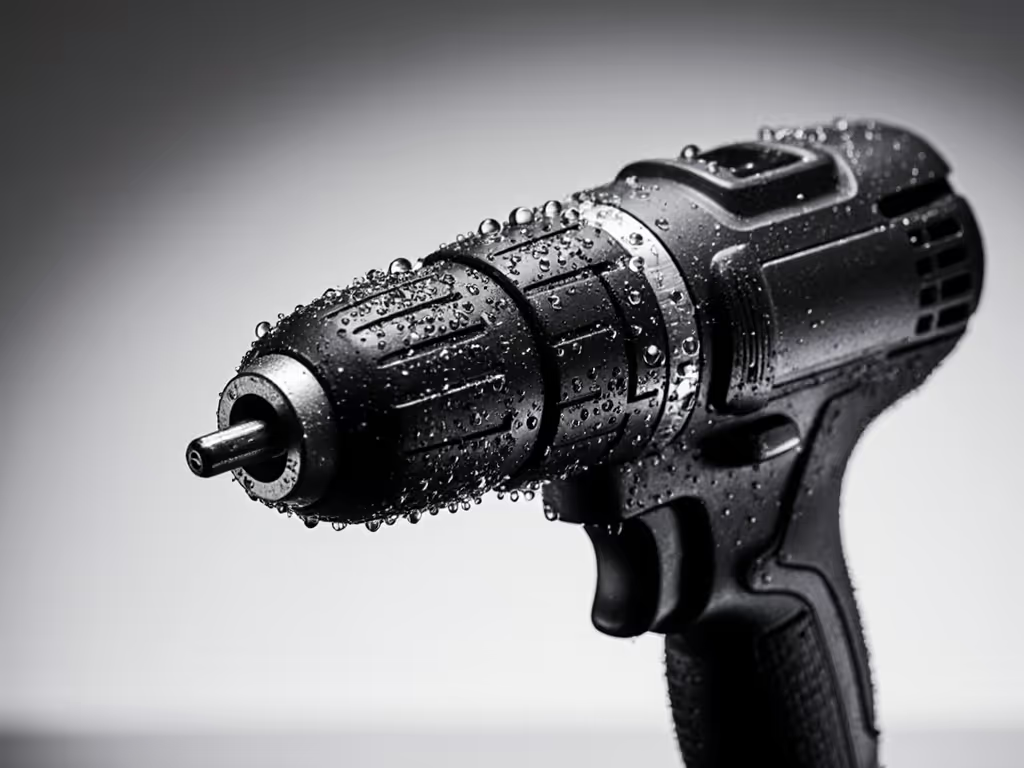
6. Bosch 18V Brushless Connected-Ready 1/2" Hammer Drill/Driver (GSB18V-755C)
Best for: Tech-forward users who like data and want a rugged drill with smart customization.
Why it works in wet climates
Bosch often flies under the radar, but their pro drills are:
- Well sealed against dust and jobsite grime
- Designed with controlled venting that doesn't invite water directly into electronic hot spots
While not a marine tool, it copes well with the kind of moisture you see in most greenhouse building phases.
Under-load performance
- Competitive torque and speed with other top-tier 18V drills.
- App-connectivity lets you adjust kickback control and soft-start behaviors - useful when drilling more fragile materials like polycarbonate (slower ramp-up reduces bit wandering and cracking risk when using the right bit).
Runtime expectation: With a 4-5Ah pack, you'll get respectable holes-per-charge on structural screws and panel fasteners, well within the same working envelope as Milwaukee and DeWalt on comparable batteries.
Ergonomics
- Good balance; a bit front-heavy with larger packs but manageable.
- Excellent side handle for high-torque events.
Bottom line: If you want modern safety (kickback control) and some tunability in a moisture-tolerant package, Bosch is a strong option.
7. Milwaukee M12 FUEL 1/2" Hammer Drill/Driver (3404-20)
Best for: Tight-space, overhead, and maintenance work inside greenhouses where a full-size 18V is overkill.
Why it works in wet climates
The M12 Fuel line lives on service vans, in maintenance carts, and in facilities where tools see temperature swings and some moisture. This drill:
- Is compact with fewer exposed openings
- Has enough sealing and overmold to handle condensation and light wet conditions typical of greenhouse interiors
It's not a framing drill for large posts, but it's excellent for day-to-day upkeep.
Under-load performance
- Surprising torque for a 12V platform, but still below 18V brutes.
- Excellent for:
- Hardware and hinge installation
- Light anchors and bracket mounting
- Driving roofing screws into thin metal
- With proper step bits and technique, does fine on light glass and polycarbonate drilling tasks (where allowed), keeping RPM controlled.
Runtime expectation: On a 4Ah M12 pack, you can handle a large volume of smaller screws and light drilling before swapping. For maintenance crews, that usually means one or two packs cover a full shift.
Ergonomics
- One of the most compact and light hammer-capable drills available.
- Ideal for users working in and around shelving, benches, and tight corners.
Bottom line: As a standalone, it's not your only drill for building a full-size greenhouse in wet climates. As a second drill dedicated to maintenance and interior work, it's outstanding.
Moisture-Resistant Drill Comparison: What Really Separates Them?
Here's a qualitative look at how these seven stack up for wet-climate greenhouse work:
| Drill | Moisture/Sealing Emphasis | Power for Heavy Framing | Weight/Ergonomics | Best Use Case |
|---|---|---|---|---|
| Milwaukee M18 FUEL 2804-20 | Very good jobsite sealing | Excellent | Moderate-heavy | Full builds, structural framing, anchors |
| Makita XPH14 | Strong (XPT) | Excellent | Good balance | Full builds with frequent wet exposure |
| DeWalt DCD996/DCD999 | Good | Excellent (esp. DCD999) | Moderate-heavy | Builders on DeWalt platform |
| Makita XFD15 Sub-Compact | Good | Moderate | Lightest | Small/medium builds, overhead work |
| Hilti SF 6H-22 (Nuron) | Excellent | Excellent | Moderate | Commercial ops and fleet tools |
| Bosch GSB18V-755C | Good | Excellent | Good | Tech-savvy users, mixed materials |
| Milwaukee M12 FUEL 3404-20 | Good for interior use | Moderate | Very light | Maintenance, tight spaces |
None of these drills are meant to be soaked or pressure-washed, but models with better sealing and coating have a proven edge in damp greenhouses and farm structures.
A Crucial Piece of the Puzzle: Battery Kits That Tolerate Real Weather
A drill is only as reliable as the battery strapped to it - especially in cold, damp environments. Protect runtime in heat and cold with our battery temperature care.
If you're building or maintaining a hobby greenhouse and already run, or are considering, the Ryobi ecosystem, this kit is worth a look for its weather performance and price-to-runtime ratio.
Ryobi ONE+ 18V Lithium-Ion 2.0Ah Battery and Charger Kit (PSK005)
This isn't a drill, but it's central to whether your agricultural power tools actually run when the weather turns.
- Platform breadth: Compatible with over 200+ tools in the ONE+ line - everything from drills and drivers to trimmers, blowers, and small pumps. That's valuable if you're standardizing tools for a homestead or small farm.
- Extreme weather performance: The cells and pack design are engineered to deliver fade-free power in a range of temperatures, which matters for unheated sheds and early-morning starts.
- Runtime vs. weight: 2.0Ah isn't huge, but the lighter weight is noticeable on smaller drills and impact drivers during overhead work inside greenhouses.
- Charging: The included charger brings a depleted 2.0Ah pack back up in under an hour, helpful if you're cycling a small number of batteries through the day.
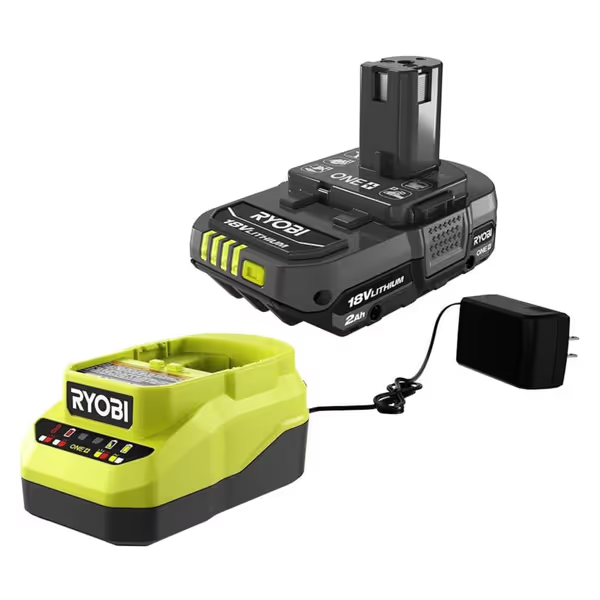
RYOBI One+ 18v Lithium Ion 2.0ah Battery and Charger Kit
Power all 225+ ONE+ tools with one battery, fast charging.
$45
Charge TimeUnder 1 hour (0-100%)
Charge TimeUnder 1 hour (0-100%)
Pros
Powers over 225+ RYOBI 18V ONE+ tools
Fade-free performance, comparable to corded tools
IntelliPort technology protects battery life
Cons
Battery runtime receives mixed reviews
Occasional reports of missing components upon delivery
Customers find the battery charger works well and is easy to use, with quick charging capabilities and good value for money. Moreover, they appreciate its power, with one customer noting it provides up to 45+ minutes of runtime. However, the battery life receives mixed reviews - while some find it long-lasting, others report it doesn't last long enough to run their tools. Additionally, one customer mentions the charger and battery are missing.
Customers find the battery charger works well and is easy to use, with quick charging capabilities and good value for money. Moreover, they appreciate its power, with one customer noting it provides up to 45+ minutes of runtime. However, the battery life receives mixed reviews - while some find it long-lasting, others report it doesn't last long enough to run their tools. Additionally, one customer mentions the charger and battery are missing.
Where it fits in a greenhouse toolkit:
- Great for garden structure maintenance tools - a compact drill/driver, impact driver, oscillating tool, and small blower to clear debris.
- If you're primarily doing lighter builds (smaller hobby greenhouse, cold frames, hoop houses), the ONE+ system gives you a lot of flexibility on a budget.
Limitations to be aware of:
- 2.0Ah capacity is modest for heavy structural framing; you'll want higher Ah packs if you're driving long structural screws all day.
- Ryobi drills lag behind the top-tier pro models in raw under-load speed and torque stability. For serious large greenhouse construction in very wet climates, I'd still lean to the pro drills above, but this kit is compelling for lighter duty and broader platform use.
Practical Tips for Using Drills in Wet Greenhouse Conditions
Regardless of brand, you can extend tool life and improve safety with a few habits: If you work near coastal spray, check our offshore corrosion-tested drills for added salt protection considerations.
- Storage:
- Keep drills and batteries off the bare ground and away from active condensation drips.
- A small wall cabinet in the greenhouse or nearby shed goes a long way.
- Acclimate batteries:
- In cold weather, store packs indoors and bring them out when you start work.
- Cold lithium cells deliver less runtime and power; warming them to room temp recovers capacity.
- Drilling polycarbonate and (if needed) glass:
- Use appropriate bits: brad-point or step bits for polycarbonate, specialized glass bits for glass.
- Run lower RPM with steady pressure to avoid cracking. Drills with good trigger control and soft-start (like the Bosch) help.
- Avoid soaking tools:
- Light drizzle and humidity are one thing; direct spray from hoses or pressure washers is another.
- Wipe tools down after wet sessions and let them dry in a ventilated, covered spot.
- Safety:
- Use auxiliary handles on high-torque drills when boring large holes or using hole saws; kickback is worse when bits bind in wet wood.
- Eye protection is non-negotiable, especially with overhead framing and drilling brittle materials.
Summary and Final Verdict: Picking the Right Drill for Your Wet-Climate Greenhouse
If we strip away the marketing and focus on under-load speed, torque stability, and holes-per-charge, here's how I'd match drills to common greenhouse scenarios:
-
Building a full-size greenhouse or multi-bay structure in a rainy/cool climate
-
Top picks: Makita XPH14, Milwaukee M18 FUEL 2804-20, DeWalt DCD996/DCD999.
-
These give you the mix of real power, decent moisture resistance, and runtime you need for heavy framing.
-
Commercial growers and institutional facilities (schools, research greenhouses)
-
Top pick: Hilti Nuron SF 6H-22.
-
Higher upfront cost, but outstanding durability and fleet-oriented battery management justify it.
-
Small to medium hobby greenhouses, cold frames, and ongoing maintenance
-
Top picks: Makita XFD15 Sub-Compact, Milwaukee M12 FUEL 3404-20 as a maintenance drill.
-
Far less fatigue, still plenty of power for smaller fasteners and panel work.
-
Data- and safety-conscious users drilling mixed materials (wood, steel, polycarbonate)
-
Top pick: Bosch GSB18V-755C, for its tunable kickback control and smart features.
-
Budget-conscious homesteads wanting a broad ecosystem of tools
-
Platform to watch: Ryobi ONE+ with kits like the 18V 2.0Ah battery and charger.
-
Great for lighter-duty greenhouse projects and a wide range of backup tools, though serious framing crews will appreciate the extra grunt of the pro platforms above.
If you're stuck choosing between them, start by answering three questions:
- What's the heaviest task I realistically need to do regularly? (6 inch structural screws, or mostly 3-4 inch and panel screws?)
- How wet and cold will the tool's storage environment be? (Unheated, damp shed vs. climate-controlled shop.)
- What other tools do I want on the same battery platform over the next 3-5 years? (Saws, nailers, OPE, pumps.)
Match your answer to the drill families above, and you'll land on a tool that won't just look good on paper - it will actually keep pace in a wet greenhouse when the real work starts. For brittle materials in greenhouse builds, keep cracks at bay with our specialty drill bits for glass.
Related Articles