Art Restoration Drill Guides: Precision Without Risk
By Marco Silva • 23rd Feb

When you're working on art restoration, drilling carries stakes that routine construction simply doesn't. A misaligned hole, a slip, or tremor can damage irreplaceable pieces. This is where art restoration drill guides and precision conservation tools become not just conveniences, they're essential safeguards. In this guide, I'll walk you through how these tools work, why setup matters more than raw power, and how to choose systems that deliver accuracy without risk to your work or your hands.
Understanding the Role of Drill Guides in Art Restoration
Why Does Precision Matter More in Restoration Than General Construction?
In standard drilling, a 1/16-inch deviation might be acceptable, you can often hide it or adjust. In art restoration, there is no "acceptable" deviation. You're working with materials that cannot be replaced: antique wood, museum-grade frames, hand-carved details, or heritage furniture. A hole placed even slightly off-center can ruin sightlines in a marquetry pattern, compromise the structural integrity of a joint, or create a visual flaw that undermines the entire conservation effort.
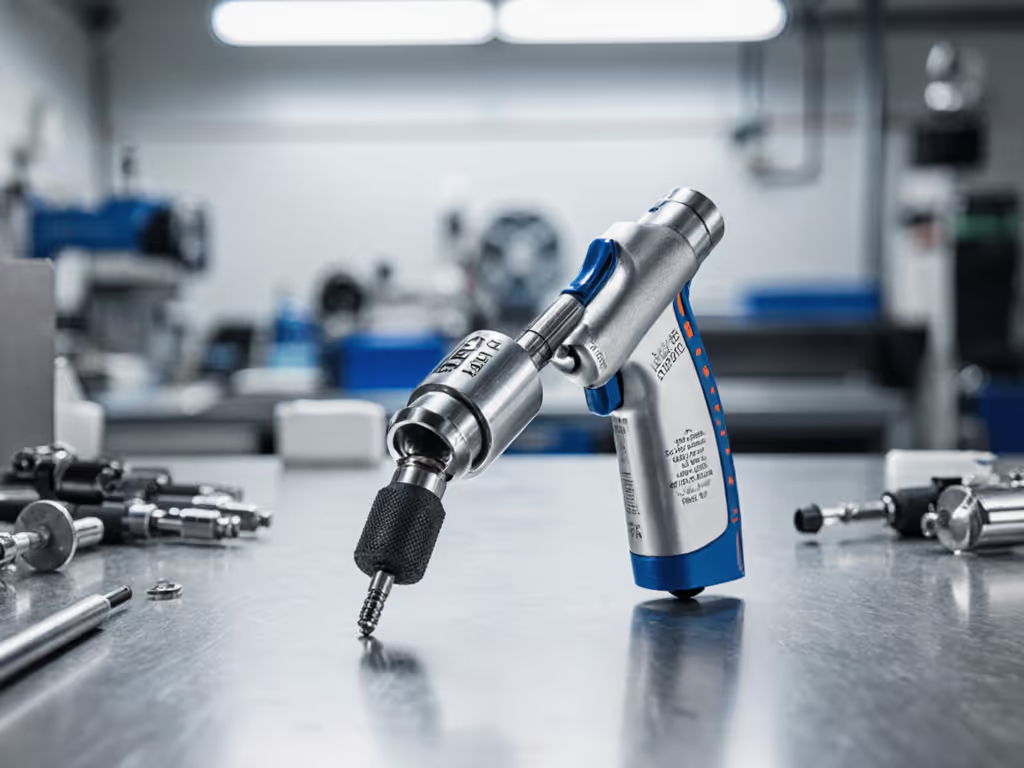
Drill guides transform your handheld cordless drill from a general-purpose tool into a precision conservation tool. They lock the angle, control depth, and eliminate hand wobble (the three sources of error that matter most when accuracy is non-negotiable). For a step-by-step primer on technique, see our guide to drilling straight holes without a drill press.
What Makes Art Restoration Drilling Different?
Art restoration drilling differs from standard work in four critical ways:
- Material variability: You may encounter 200-year-old walnut, veneer, softwood repairs, or mixed compositions. Each requires different speed, torque modulation, and bit selection.
- Invisible placement: Many holes must be concealed or placed so precisely they align with existing geometry (dowel holes, joining points, or hidden fasteners).
- No second chances: A stripped hole in an antique cannot simply be re-drilled nearby; you must succeed on the first attempt.
- Aesthetics and integrity: The work must be invisible to the casual eye, and the repair must be reversible or undetectable.
These demands explain why fine art drilling techniques prioritize control over speed, and why the setup (bit selection, guide choice, speed settings, and clutch engagement) matters far more than the drill's horsepower rating.
Key Features of Precision Drill Guides for Art Restoration
Angle Adjustment and Repeatability
One of the most valuable features in a drill guide is the ability to lock and repeat angles reliably. Quality guides offer incremental angle adjustments, often in 5-degree or 15-degree increments, with detents that hold each position securely.
Why this matters: In furniture restoration, legs must often be angled consistently (all four identical, or all matching a historic pattern). A guide that adjusts from 0 to 45 degrees in predictable steps allows you to set once and drill multiple identical holes without drift. Some guides even allow fine-tuning between detent points for angles that fall outside standard increments.
Depth Control and Visual Alignment
A built-in depth stop prevents one of the most common risks: drilling through the back of a workpiece or into the surface beneath it. This is especially critical when working on veneered or delicate surfaces where punch-through instantly ruins the piece.
Beyond mechanical stops, guides with built-in centerlines or V-groove positioning help you see exactly where the bit will enter, reducing alignment guesswork and human error.
Material-Specific Positioning
Art restoration often involves round stock (dowels, chair legs, turned details, or pipe inlays). A guide with V-notches or cradles holds round work securely and ensures the hole enters perpendicular or at the intended angle, critical for joinery that must support weight or align visually.
Heavy-Duty Construction and Stability
Drill guides designed for precision work use robust materials and anchoring pins that lock the guide to your workpiece or benchtop. This prevents creep, shift, or vibration during drilling (all sources of inaccuracy that compound over multiple holes).
FAQ: Common Concerns in Art Restoration Drilling
Do I Need a Museum-Grade Tool to Do Museum-Grade Work?
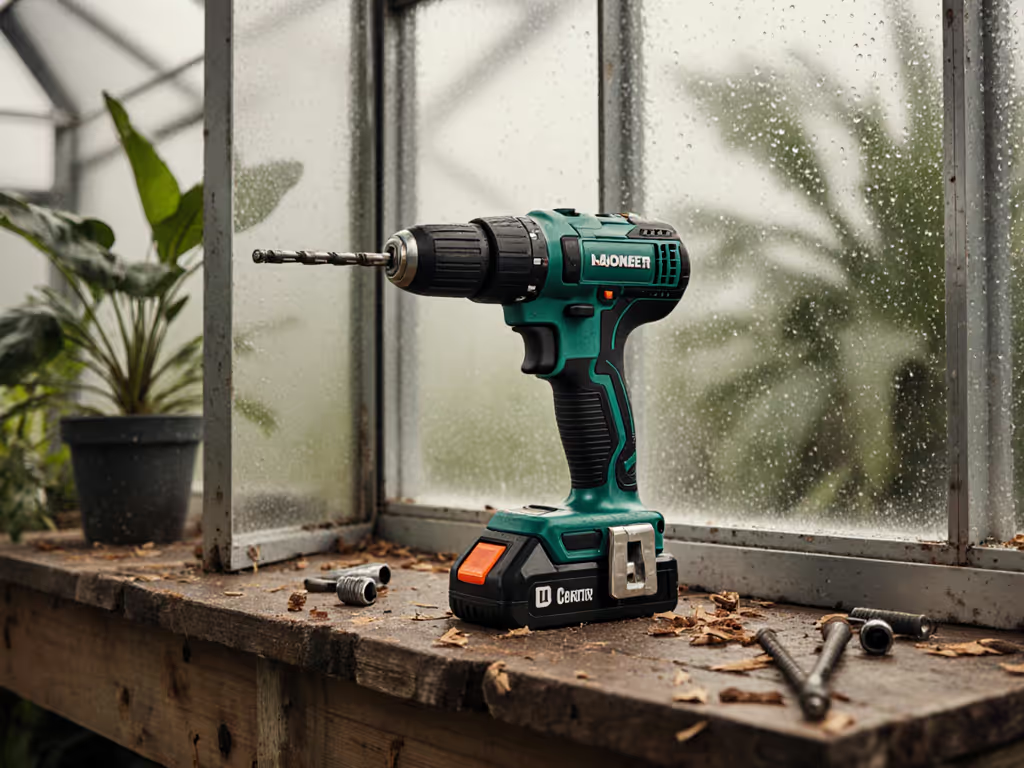
No, but you need a museum-grade setup. A mid-range cordless drill paired with the right guide, bit, speed, and technique will outperform a high-torque drill without proper controls. I learned this early: an apprentice struggled with ceiling work, rubbing his wrist after each session. We did not buy him a lighter drill (we swapped to a shorter head, added a side handle, balanced the setup, and, crucially, set the clutch and cadence). His output rose and the pain faded. That taught me fatigue costs more than another battery ever will.
Precision conservation tools are about control, not exclusivity. A careful setup beats raw weight every day.
What Speed Should I Use for Delicate Materials?
Speed depends entirely on material and bit size. For antique hardwoods, run slow (under 500 RPM if possible). For softwoods or veneered surfaces, you might go slightly faster but still prioritize control over speed. Slower drilling gives you better feedback, reduces heat, and prevents grabbing or tear-out.
Many restoration specialists advocate using a corded or right-angle drill that allows true low-RPM operation rather than relying on a cordless drill's minimum speed setting. If using cordless, select a guide that accepts a side handle (this redistributes grip stress and lets you maintain steady pressure without wrist strain).
How Do I Prevent Tear-Out and Splintering?
Tear-out happens when the bit exits the back of a workpiece with force, splintering the surface. Prevention strategies include:
- Backing boards: Always place scrap wood beneath the workpiece to capture bit exit and prevent blow-through.
- Brad-point bits: These bits have a center spur that prevents wandering and a pair of small wings that cut cleanly. They outperform standard twist bits on delicate work.
- Slow feed: Let the bit do the work. Pressing hard accelerates tear-out; steady, light pressure gives the bit time to cut cleanly.
- Depth stops: A guide with a reliable depth stop eliminates uncertainty and prevents the catastrophic over-penetration that causes splintering.
Is a Clutch Feature Really That Important?
Yes, it's one of the most underrated safety features in restoration drilling. A clutch disengages the chuck if the bit binds, preventing sudden rotational shock that can twist your wrist or slip the workpiece. When working on irreplaceable pieces, you want every safety margin. Set the clutch just above the torque needed for your task, and you've built in protection against over-torquing or sudden catch.
As I often say: set the clutch, save the wrist. This applies equally to your hands and to your piece.
Can I Use Standard Bits for Art Restoration, or Do I Need Specialty Bits?
Standard bits work in a pinch, but specialty bits deliver better results. For restoration work, invest in:
- Brad-point bits for clean, accurate holes with minimal splintering.
- Spade bits for quick, clean holes in softwood, especially useful for doweling.
- Core drill bits for creating clean, repeatable holes in veneered or laminated stock. Core bits are especially valuable for non-invasive restoration drilling where you need to create passage holes that don't disturb surrounding material.
- Step bits for countersinking or creating shallow depressions without breaking through.
Bit selection is part of setup; choosing the right bit for your material and hole size reduces risk and improves repeatability.
How Do Drill Guides Reduce Fatigue During Long Restoration Sessions?
Drill guides reduce fatigue through several mechanisms:
- Weight distribution: A guide anchored to the workpiece transfers the load away from your hands and arms, so you're not muscle-fighting the drill for an hour.
- Stability and control: You're guiding a locked tool, not steering a loose cordless drill. This lower cognitive load and reduced micro-adjustments mean less cumulative strain.
- Ergonomic grip options: Many guides include offset handles or allow you to attach side handles, distributing pressure across your palm rather than concentrating it in your fingers and wrist.
- Reduced speed need: A guide-controlled hole requires less RPM and lighter feed pressure, so the drill runs quieter and cooler, and your body isn't braced against vibration.
Over a full restoration project (especially overhead work on picture frames or tall furniture), the difference in wrist and shoulder strain is measurable and meaningful. For data-backed picks that reduce vibration and fatigue, see our vibration dampers comparison.
What's the Difference Between Adjustable and Fixed-Angle Guides?
Fixed-angle guides (typically 90 degrees for straight drilling) are simple, rock-solid, and lightweight. They're ideal if every hole is perpendicular and you're drilling into a consistent surface.
Adjustable guides allow you to set any angle within a range (usually 0 to 45 degrees), making them far more versatile for restoration work where joinery may require angled holes, chair leg drilling, or architectural details that demand precision at non-perpendicular angles.
For most art restoration, adjustable guides pay for themselves in versatility. The trade-off is slightly more weight and complexity (but the setup control they unlock justifies it).
How Do I Set Up a Drill Guide for Maximum Accuracy?
Setup follows a clear sequence:
- Choose your bit based on material and hole size. For antique wood, prefer brad-point.
- Set the angle on your guide and lock it securely. Test by hand to confirm there's no play.
- Anchor the guide to your workpiece or benchtop using clamps, pins, or the guide's built-in anchoring system. The guide must not shift during drilling.
- Set the drill's depth stop or the guide's depth stop (or both for redundancy) to prevent punch-through.
- Set the drill's clutch just above the torque needed for your task.
- Place backing beneath the workpiece.
- Start at low RPM, apply light, steady feed pressure, and let the bit work. Increase RPM slightly only if the bit is loading (slowing) without cutting progress.
- Stop before breakthrough; slow down and ease the bit through the final millimeters to prevent splintering.
This sequence converts a loose cordless drill into a precision tool. The setup takes 2 to 3 minutes; the accuracy and safety payoff is immense. To keep accuracy consistent over time, follow our drill calibration guide.
Choosing the Right Drill Guide: Selection Criteria
Material and Build Quality
Drill guides for precision work should be made of cast aluminum, steel, or reinforced polymers (not lightweight plastic). A heavy, stable body prevents vibration and drift.
Compatibility with Your Drill
Most guides fit standard 3/8-inch or 1/2-inch chuck drills. Verify your drill chuck size before purchasing. Some guides are universal; others are drill-specific. Universal guides offer flexibility if you own multiple drills or plan to upgrade.
Range and Precision of Angle Adjustment
For restoration work, a range of 0 to 45 degrees covers most joinery and architectural detail drilling. Finer adjustment (5-degree increments over coarser 15-degree steps) gives you more flexibility, though both are workable if you can fine-tune between detents.
Depth Control
A built-in depth stop is non-negotiable. It should be easy to set, reliable, and independent of the drill's speed setting.
Support for Round Stock
If your restoration includes chair legs, dowels, or turned details, look for guides with V-grooves or cradles that hold round work safely.
Weight and Portability
A guide heavy enough to be stable shouldn't be so heavy that you're constantly repositioning it or fatiguing lifting it. Most precision guides weigh 2 to 5 pounds, which is manageable. Check the dimensions to ensure it fits your workspace and storage.
Ease of Setup
Look for guides with simple, intuitive angle adjustment, quick-lock mechanisms, and clear centerline markings. A guide that takes 5 minutes to set up will be used; one that requires 15 minutes of fiddling won't.
Safety-Forward Practices in Art Restoration Drilling
Personal Protective Equipment
Wear safety glasses or a face shield every time you drill, even on small pieces. Bits can break, or a workpiece can rotate suddenly if it catches.
Proper Stance and Grip
Stand so the drill's rotation would move away from your body if the bit catches. Use both hands (one on the drill's main handle, one on the side handle if available). Never wrap your fingers around the chuck or near the bit's path.
Workpiece Clamping
Always clamp your workpiece. Never hold it by hand. A caught bit can rotate the piece violently, causing injury and damage.
Bit Inspection
Before each drilling session, inspect bits for cracks, chips, or wear. A damaged bit is far more likely to catch, break, or tear material.
Speed and Pressure Modulation
Let the tool and bit do the work. Light, steady pressure beats heavy pushing. If you feel the bit loading, reduce RPM or feed pressure. Excessive pressure indicates an overly fast speed or a dull bit, adjust rather than forcing.
Summary and Final Verdict
Art restoration drill guides are the bridge between a general-purpose cordless drill and the precision demands of conservation work. They reduce risk, improve accuracy, and protect both your hands and irreplaceable pieces.
The best guide for your restoration practice is the one you'll actually use, which means it must be intuitive to set up, stable during drilling, and compatible with the drill(s) you own. Adjustable guides offering 0 to 45 degrees in small increments, with solid depth control and support for round stock, cover the broadest range of restoration tasks.
But here's the core truth: the guide alone isn't the answer. Precision comes from the system (guide, bit selection, speed, clutch setting, backing, clamping, and technique working together). Invest time in understanding each element. Practice your setup sequence on scrap material identical to your restoration piece. Test your depth stop and angle lock before committing to the actual work.
When you prioritize setup over speed, and control over raw power, you transform an ordinary cordless drill into a precision conservation tool capable of delivering museum-grade results. Your wrists will feel better, your pieces will thank you, and your reputation for meticulous restoration will grow. That is not just safety, that is the foundation of trust and longevity in this craft.
Related Articles