Know True Value in Vintage Power Drill Collecting
By Marco Silva • 11th Feb
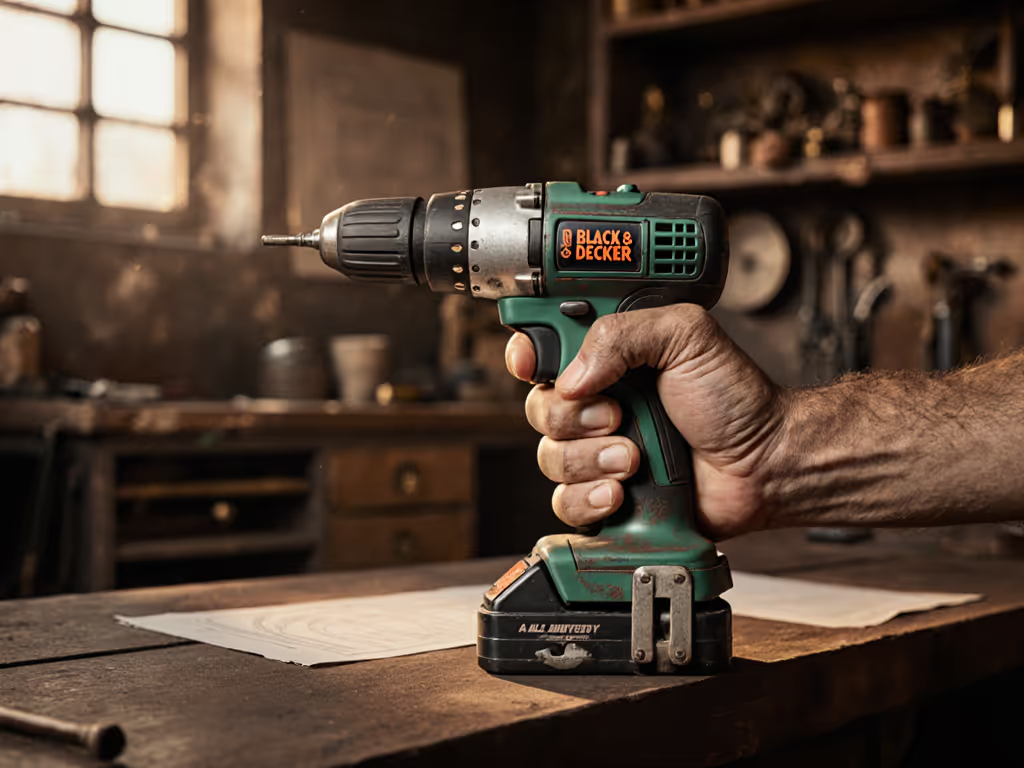
When you delve into vintage power drill collecting, you're not just curating a display of old tools, you're preserving the evolution of ergonomic design and mechanical ingenuity that shapes today's modern drills. For a deeper timeline of these innovations, see our history of power drills. Unlike flashy auctions where rarity dictates price, true value in antique drill restoration lies in understanding how these tools solved real-world problems of balance, vibration, and user fatigue. I've assessed thousands of drills across decades, and what separates mere collectibles from genuinely valuable pieces is how they balanced form and function (something that still matters today when you're drilling overhead for hours).
How do you define "true value" in vintage power drill collecting?
True value isn't just about eBay price tags or pristine boxes. It's about people-first metrics: how the tool felt in a user's hands after a long shift. Was the grip circumference comfortable for extended use? Did the weight distribution minimize wrist strain when working overhead? These weren't just "nice-to-haves", they were productivity multipliers. Back when Craftsman and Skil dominated the market, the best models succeeded because they prioritized operator comfort as much as raw power. Balance beats raw weight every day, a principle that remains true whether you're restoring a 1950s Thor copper line drill or selecting a modern cordless for ceiling work.
Many collectors fixate on torque numbers from vintage catalogs, but those often tell only half the story. If torque, RPM, and chuck size terms feel murky, our understanding drill specifications guide clarifies what actually matters. I once watched an apprentice rub his wrist after a full day drilling into joists with a heavy-duty bricklayer's drill. The tool had impressive specs on paper, but its poor balance created fatigue that eroded both speed and accuracy. That's why I evaluate vintage drills through the lens of safety-forward design: how well they managed stress on the user's body over time.
What identification markers separate valuable vintage drills from common finds?
Old drill identification starts with manufacturer markings, but goes deeper than model numbers. Look for:
- Patent dates stamped on housings (pre-1960s tools often show ingenious mechanical solutions)
- Ergonomic refinements like contoured grips or weight-balancing housings
- Material quality (all-metal gears vs. early plastics that degraded)
- Innovative features that addressed specific fatigue points (e.g., vibration dampeners)
Tools from brands like Millers Falls or early Bosch often hold value because they pioneered visual cues that helped users work more efficiently, like clearly marked speed settings or intuitive chuck designs. When cataloging your finds, ask: "Did this design reduce repetitive strain during actual use?" That's often more telling than corporate logos.
Why does preservation often trump full restoration for serious collectors?
Vintage tool preservation honors the tool's authentic service history. Many collectors make the mistake of stripping away decades of honest wear, not realizing they're erasing the very evidence of how these tools were actually used. Patina on a handle shows where hands naturally settled for optimal control. Wear patterns on triggers reveal how users modulated speed for different tasks.
Complete restoration often destroys these subtle people-first metrics. That's why I always stress the setup when examining vintage pieces (what mattered wasn't just the tool in isolation, but how it performed within a workflow).
How does power tool history inform what collectors should prioritize today?
Studying power tool history reveals patterns that separate fads from enduring value. During the 1950s and 60s, manufacturers competed on raw power, but the market shifted when electricians and carpenters demanded lighter tools they could use for hours without fatigue. The most valuable vintage drills represent turning points where form finally followed function.
Take the rare Thor copper line drills featured in many collections, and they're coveted not just for rarity, but because their distinctive styling often masked thoughtful engineering like balanced armatures that reduced vibration. These weren't gimmicks; they were solutions to the hidden costs of fatigue that could ruin a day's work. For modern context on reducing fatigue, see our drill vibration dampers comparison with real comfort data.
Fatigue is a hidden cost that erodes quality and speed: this truth shaped both vintage and modern tool design.
What metrics actually determine collectible drill value beyond nostalgia?
Forget "works perfectly" as the sole metric. True collectible drill value comes from understanding how the tool solved ergonomic challenges:
- Weight distribution: Tools with motors positioned toward the rear often reduced wrist strain
- Trigger ergonomics: Gradual pressure curves that prevented finger fatigue
- Vibration control: How housings absorbed rather than transmitted motor shake
- Work envelope: Whether the design allowed access to tight spaces without compromising control
These factors directly impacted how many hours a tradesperson could reliably work. That was the ultimate measure of value then and now. When evaluating pieces, I look for evidence that manufacturers understood these clear and calm performance metrics rather than chasing torque numbers that looked good in catalogs but didn't translate to real productivity.
What mistakes do new vintage power drill collectors commonly make?
Most newcomers stress the wrong details. They focus on:
- Surface-level cosmetic condition over functional ergonomics
- Torque claims without considering duty cycle limitations
- Complete restoration that erases evidence of actual usage patterns
- Rarity without context of how the tool performed in daily work
I've handled Craftsman Portalign drill guides that collectors dismissed as "just a jig" until they understood how its precision reduced user fatigue during repetitive tasks. The tools that hold enduring value are those that solved the human problem first, balance over bravado always wins in the long run.
Final Verdict: What really matters in vintage power drill collecting?
After decades assessing tools from both eras, I've learned that the most valuable vintage power drills share one trait: they respected the human element. While collectors debate rarity and finishes, the pieces that will continue gaining value are those that demonstrate thoughtful solutions to fatigue, vibration, and control (challenges that still define modern tool quality). For practical nuance on applying these lessons today, read our vintage vs modern drill restoration comparison.
Don't chase price guides or auction records. Instead, evaluate each piece through people-first metrics: could this tool have been used all day without compromising the user's body or work quality? If so, you've found something genuinely valuable, not just as a collectible, but as a historical lesson in human-centered design.
True collecting isn't about amassing old objects; it's about preserving the wisdom embedded in tools that understood the hidden cost of fatigue. That's why the best vintage drills aren't just museum pieces, they're blueprints for better tools today.
Related Articles