Converting Cordless Drills to Pottery Wheels: RPM Reality Check
By Jordan Reyes • 12th Apr
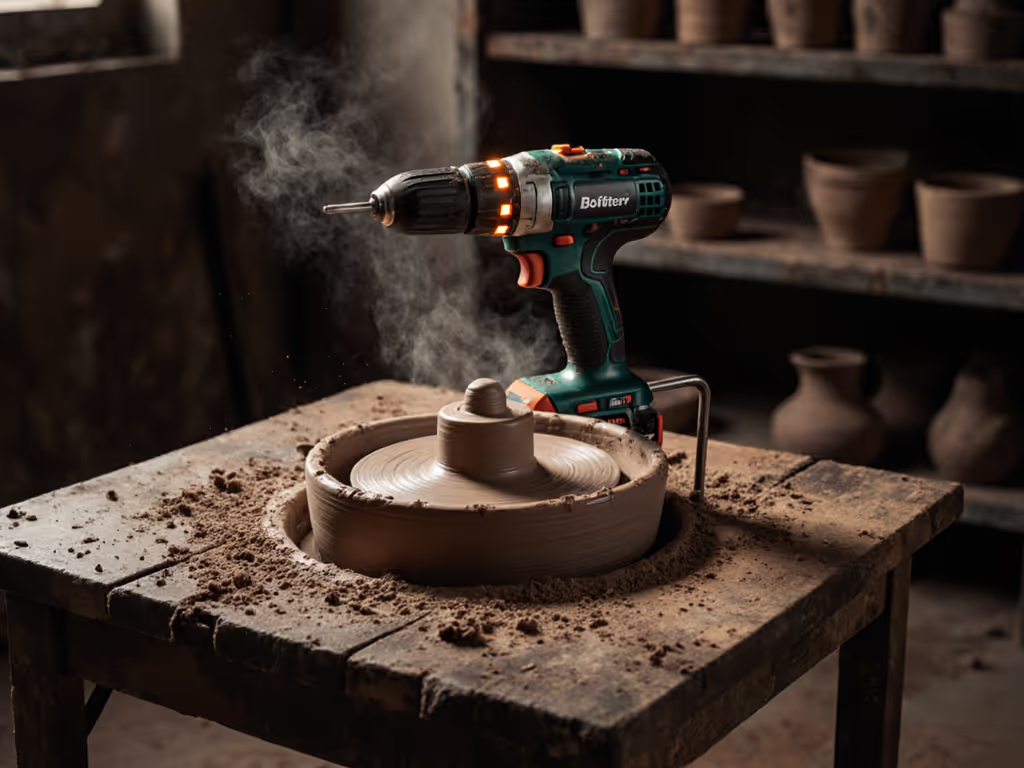
The idea sounds practical: you already own a cordless drill, it spins, and pottery wheels spin too (why not convert one into the other?). The answer lies in the gap between what a drill's spec sheet promises and what a pottery wheel actually demands under load. Let's walk through the metrics that separate marketing RPM from ceramic reality.
What the Brochure Claims vs. What Clay Demands
Most cordless drills advertise no-load RPM in the 1,500 to 3,000 range. Pottery wheels, by contrast, typically operate between 20 and 300 RPM (centering clay requires lower speeds and far more sustained torque than a drill is designed to deliver). Here's the critical gap: a drill's RPM drops sharply the moment you apply load. For a plain-English breakdown of RPM, torque, and what they mean in use, see our drill specs guide. Under the sustained, multi-directional pressure of clay centering, that no-load figure becomes largely irrelevant.
A cordless drill is engineered for intermittent, discrete tasks: driving a fastener, drilling a hole, then stopping. The motor and gearbox expect brief surges of demand followed by rest. Pottery demands continuous, variable load for 5 to 15 minutes per wheel session. Crew-hour math matters when you're planning tool investment: a drill doing what it wasn't built for will thermally throttle, lose torque stability, and shorten battery and motor life faster than field tests predict.
The Torque Reality: Why RPM Alone Tells You Nothing
This is where I see most conversions fail. Two drills with identical 1,500 RPM specs can perform radically differently under actual load (something I learned the hard way on a hospital build-out when two 18V models with the same brochure speed responded completely differently to sustained pressure). One sagged and smoked under a spade bit; the other held pace all shift. My torque meter and field data settled the argument: torque stability under load matters infinitely more than peak RPM. If you're wondering why one model resists sag better, start with brushless vs brushed differences.
Pottery demands sustained torque (typically 15 to 30 ft-lbs for most hand-centering work, applied continuously and from multiple angles as your hands guide the clay). Cordless drills are rated for peak torque, often measured in brief, single-direction applications. Under the variable, multi-axis stress of centering clay, the motor's performance will sag, recovery times will lag, and thermal throttling will kick in. Battery voltage sag compounds the problem: as the pack draws down from 20V nominal to 17V or lower under load, the drill loses torque and RPM simultaneously.
Why Speed Control Becomes Your First Real Problem
A pottery wheel's speed control is analog and responsive, you adjust RPM in real time, often with foot pedal or lever control, because different clay-work stages demand different speeds. Centering requires slower, more torque; throwing off the wheel demands higher speed for control. Cordless drills offer minimal speed modulation. Trigger modulation exists, but it's coarse, non-linear, and fatiguing to maintain for extended periods. You'll find yourself fighting the tool's natural tendency to hunt for speed rather than holding a steady, predictable RPM range.
Second, most drills include a two-speed transmission (e.g., 0 to 450 RPM and 0 to 1,500 RPM). In low speed, you might achieve pottery-wheel-like torque, but you lose responsiveness and introduce vibration. That vibration (a fact confirmed by field reports and maker forums) translates directly into hand fatigue and uneven clay work. For tools that tame those harmonics, see our lab test of drill vibration dampers. Pottery wheels are purpose-built to minimize vibration; drills are not.
Bearing Load and Wobble: The Spec Sheet Ignores This
A pottery wheel's spindle is engineered to handle radial and axial loads from clay pressure. A drill's chuck and spindle assembly assume brief, axial loading (bit pushed straight into material, then released). Centering clay applies side-loading, variable vectors, and extended pressure, exactly what a drill's bearings are not designed for. Result: runout, wobble, and premature bearing wear. You won't see this in a manufacturer's spec sheet because it's not a scenario they test for. Under actual pottery-wheel-style loads, a drill's spindle will drift and wobble, making clay work sloppy and increasing the risk of catching your hands or fingers.
Battery Demand: The Underestimated Runtime Killer
Pottery sessions often run 30 to 60 minutes of continuous wheel time. A cordless drill's battery, sized for intermittent fastening or drilling, will deplete much faster under continuous, loaded operation. An 18V 5.0 Ah pack might deliver 10 to 15 minutes of steady pottery work before voltage sag and thermal throttling force a swap. If runtime is your bottleneck on actual drilling projects, our drill battery kits guide explains capacity trade-offs and fast charging. That's not just inconvenient, it disrupts the creative flow and forces you to maintain extra batteries and a dedicated charger on-site. Crew-hour math, again: the real cost of the conversion includes battery redundancy and downtime management, which most DIYers don't budget for.
The Vibration-Free Drilling Question: A Misleading Framing
One supporting keyword that surfaced was "vibration-free drilling for ceramics." This phrase conflates two different problems. Pottery wheels should be vibration-free for smooth clay work. Drills, especially at lower speeds or under variable load, are inherently vibration-prone, brush chatter, gear mesh harmonics, and bearing play all contribute. Centering clay on a vibrating platform produces uneven work, hand fatigue, and potential slippage or catch points. You cannot retrofit a drill to eliminate these vibrations; they're structural to the tool's design.
Practical Reality: When Conversion Fails
- Runout and wobble that prevents true centering and throws work off balance
- Thermal throttling within 10 to 15 minutes of continuous work, forcing stops
- Motor burnout from sustained overload conditions the tool wasn't rated for
- Hand fatigue and safety risk from constant vibration and coarse speed control
- Inconsistent clay work due to voltage sag and torque loss during sessions
What Actually Works Instead
If pottery is a serious pursuit, invest in a true electric pottery wheel (even budget models, typically $200 to $600, include purpose-built speed control, stabilized bearings, and proper heat dissipation). The upfront cost is offset by reliability, ease of use, and safety. If budget is tight, consider a used wheel or a hand-powered kickwheel, which teaches technique and eliminates the power question entirely.
For experimental or occasional use, a drill simply isn't the answer. The gap between brochure RPM and real-world ceramic demand is too wide to bridge with a conversion.
Further Exploration
If you're tempted by a conversion, start by measuring your pottery wheel's actual RPM requirements across centering, throwing, and trimming phases. Compare those numbers to your cordless drill's sustained performance under load (not the brochure spec, but actual field logs). Test the drill on continuous load for 15 minutes and measure voltage sag, torque loss, and heat buildup. That data will quickly show you why RPM marketing doesn't match ceramic reality. Better yet, rent an electric wheel for a day and feel the difference in control, speed consistency, and ease. To estimate whether renting or buying tools makes sense for your workflow, use our power tool rental comparison as a cost-per-use reference. That hands-on comparison is worth infinitely more than specs and will guide a smarter investment decision.
Related Articles