
EMI Shielded Drill Comparison: Cleanroom Guide
By Casey Bennett • 10th May
Understanding EMI Shielding in Power Tools
If you've ever worked near sensitive electronics, you've probably heard the term EMI shielded drill comparison and wondered whether it matters for your projects. The short answer: it depends entirely on your environment and what you're drilling. EMI (short for electromagnetic interference) is the invisible energy that power tools emit, and in a cleanroom or precision manufacturing setting, it can damage components worth far more than the drill itself.
But here's the thing: cleanroom power tools and EMI shielding solutions aren't niche luxuries. They're practical investments that prevent costly damage, reduce rework, and build confidence in sensitive environments. Whether you're a facilities manager maintaining production equipment, a trade professional working on-site at electronics manufacturers, or a serious DIYer setting up a precision workspace, understanding how to choose the right static-free drilling equipment will save you money and headaches.
Project drives the pick. Start with the project, then match the drill and batteries, including whether you need EMI protection.
FAQ: Choosing the Right EMI Shielded Drill
What Exactly Is EMI, and Why Should I Care?
Electromagnetic interference is energy released by a drill's motor, brushes, and electrical contacts. In an open garage, this energy dissipates harmlessly. But in a cleanroom or near unshielded circuit boards, components, or sensitive assemblies, that energy can induce false signals, corrupt data storage, or physically damage microelectronics.
Think of it like this: a standard power drill is like talking loudly in a quiet library. Electronic manufacturing drills and shielded alternatives are like whispering. The work gets done, but you're not disrupting everyone around you.
For folks working in:
- Electronics assembly plants
- Medical device manufacturing
- Research labs with sensitive instruments
- Aerospace component shops
- Telecommunications or data center infrastructure
...EMI shielding isn't optional (it's a requirement to meet industry standards and avoid equipment damage). For step-by-step mitigation near sensitive boards, see our EMI control while drilling guide.
When Do You Actually Need an EMI Shielded Drill?
Not every project requires one. Ask yourself:
Do you need EMI shielding if:
- You're drilling near unshielded circuit boards or components? Yes.
- You're working in a designated cleanroom or ESD (electrostatic discharge) protected area? Yes.
- You're drilling into metal cabinets or housings containing sensitive electronics? Maybe, depends on the design and shielding of the enclosure.
- You're doing standard home improvement, deck-building, or automotive work outside a controlled environment? No.
- You're working in a facilities or maintenance role where equipment specifications demand it? Yes, and document it.
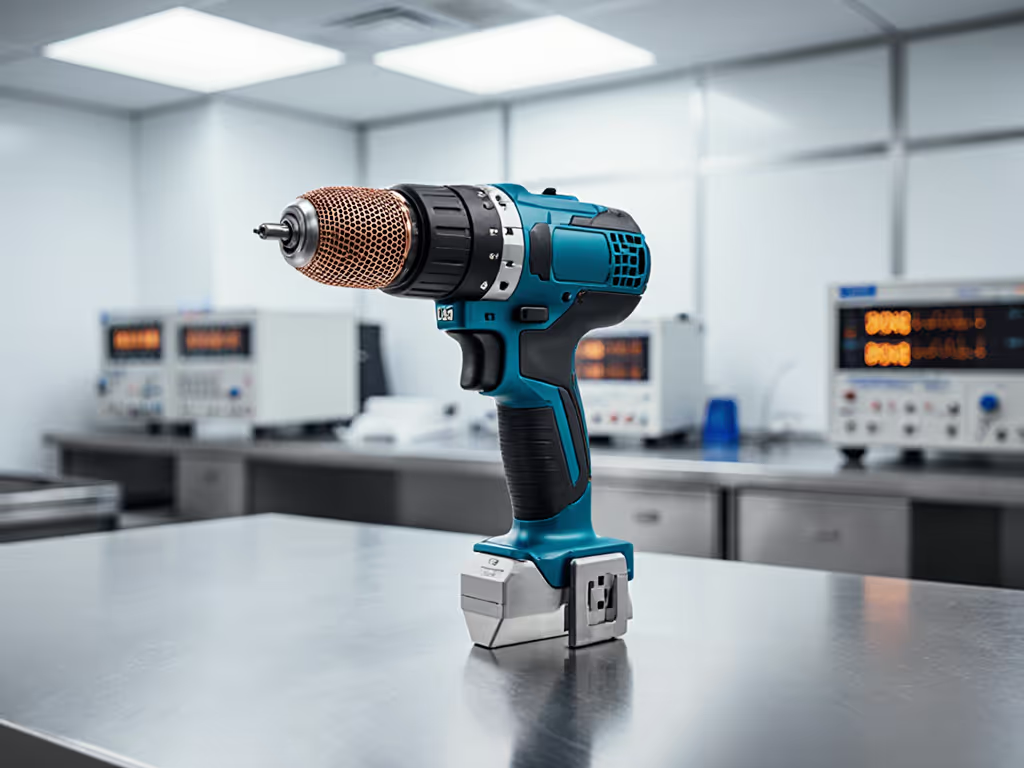
The project determines the requirement. For lab and ESD environments, start with our EMI-shielded lab drill comparison to see which models actually meet cleanroom needs. Start with the project, then match the drill and batteries. If your work touches precision lab instrumentation or electronic manufacturing, EMI protection belongs in your toolkit.
How Do EMI Shielded Drills Compare to Standard Models?
The core differences come down to three areas:
Motor Design and Shielding
- Standard drills: brushes and commutators emit high-frequency interference
- EMI shielded drill performance models: shielded windings, suppression capacitors, and grounded housings reduce emissions by 10-100x depending on frequency band
- The result: measurable compliance with FCC Part 15 or equivalent industrial standards
Cabling and Grounding
- Standard drills: basic power cord without EMI filtering
- Shielded models: braided, grounded cables with ferrite cores and low-impedance grounding paths
- On-site: shielded models often include grounding straps or clips to ensure the tool operator and workpiece are at the same electrical potential
Battery Systems (if cordless)
- Standard batteries: emissions still occur during discharge and charging
- Low-EMI drill performance batteries in regulated environments: shielded battery packs, filtered connectors, and sometimes tethered designs that reduce wireless noise
- Trade-off: shielded batteries may weigh more and are less common, affecting availability and cost
Size, Weight, and Ergonomics
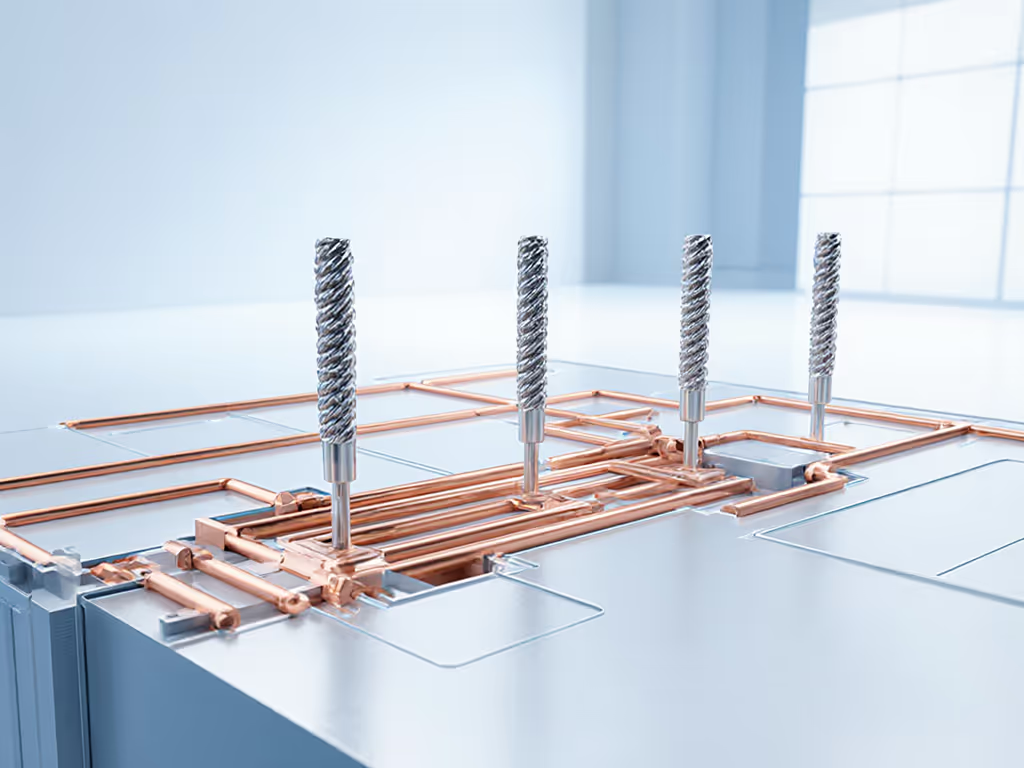
- Shielding adds materials (copper mesh, ferrite, thicker cable jackets), which increases weight
- Many EMI-rated drills are compact or right-angle models to fit tight cleanroom workspaces
- The added heft can cause fatigue during overhead or repetitive work, something to test before committing
What Specs Should You Compare?
When evaluating electronic manufacturing drills, ignore marketing claims and focus on these concrete metrics:
EMI Compliance Ratings
- Look for FCC Part 15 Class B certification (standard commercial), or Class A if you're in industrial manufacturing
- ISO 13849-1 compliance for safety-critical environments
- Your facility's specific EMI limits (ask your quality or engineering team)
No-Load Speed (RPM) and Torque
- Cleanroom drills often run at lower speeds (500-1500 RPM) to reduce EMI and vibration
- Torque ranges typically 10-30 Nm for precision lab instrumentation tasks
- Slower is often better: less noise, less vibration, less interference, and finer control, just like my neighbor's successful pilot-hole drilling with a well-dialed clutch
Bit Runout and Chuck Accuracy
- Cleanroom work demands tight tolerances; runout >0.1 mm can ruin precision holes
- Invest in Jacobs or ER chuck models with runout <0.05 mm
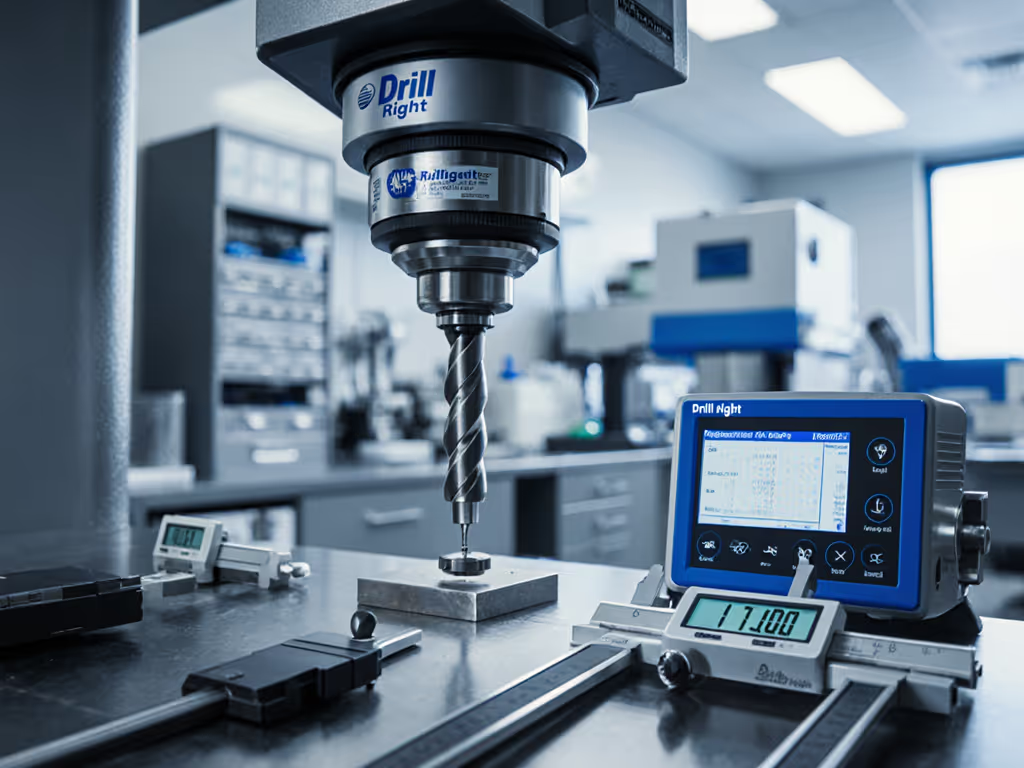
- Test-fit bits before critical work For repeatable accuracy, follow our drill calibration guide used by pro woodworkers and machinists.
Voltage Stability Under Load
- EMI shielding is only effective if power delivery remains clean
- Drills that sag voltage under load emit MORE noise (lower frequency, sometimes audible)
- Compare performance on a variable-speed test: does the drill bog down or maintain RPM on dense material?
Grounding Design
- Does the tool have a dedicated grounding terminal (banana jack, ring lug, or M4 stud)?
- Can you easily attach an ESD wrist strap or grounding cable?
- Is the housing conductive (metal) or coated plastic with conductive paths?
How Should You Set Up an EMI Shielded Drill on a Job Site?
Owning the right drill is only half the battle. Setup prevents damage:
- Establish a Ground Reference
- Clamp or tape a grounding wire from the workpiece to facility ground or the drill's grounding terminal
- Wear an ESD wrist strap (2 MΩ resistor, ANSI/ESD S20.20 compliant) to keep operator and tool at the same potential
- Use Shielded Cables
- Corded drills: run power cable away from sensitive circuits; use ferrite clamps at the tool end
- Cordless: keep battery and charger at least 3 feet from unshielded circuit boards
- Choose Your Bits Carefully
- Carbide or diamond-coated bits reduce friction and run cooler (lower EMI)
- Avoid cheap HSS bits that wear fast and overheat, increasing emissions
- Control Speed and Load
- Use the clutch or variable-speed trigger to prevent stalling or overcurrent surges (major EMI sources) If you’re unsure how to set torque for different materials, our drill clutch mechanics explainer shows the right approach.
- Pilot holes are your friend - less torque demand, cleaner current draw, less interference
- Verify Before Each Shift
- Use a handheld RF meter (if available) to spot-check emissions near the workpiece
- If an ESD-sensitive assembly fails after drilling nearby, EMI is a suspect; document and investigate
Common Misconceptions About EMI Shielded Drills
Myth: Any brushless drill is EMI-safe. Fact: Brushless motors reduce EMI compared to brushed designs, but they still emit interference, especially during commutation switching. Dedicated shielding matters more than motor type.
Myth: Shielded drills cost 10x more. Fact: A quality EMI-compliant corded drill runs $150-400; a mid-range brushless cordless shielded model is $300-600. For high-volume production use, that's a rounding error compared to scrapped components.
Myth: EMI shielding always means bulky and heavy. Fact: Modern designs use compact right-angle or pistol-grip layouts with smart shielding. Some weigh less than 4 pounds, light enough for precision overhead work without the fatigue risk.
Myth: Once you buy an EMI drill, any battery works. Fact: Battery compatibility varies. Some EMI-rated platforms use proprietary shielded battery packs. Confirm cross-compatibility before assuming a battery from another tool will work.
Real-World Performance Under Load
Here's where specs meet reality. Let's compare two scenarios:
Scenario 1: Drilling 5/32" pilot holes into aluminum extrusion in a cleanroom (3.0 mm deep)
- Standard drill (brushed, unshielded): 40 seconds, emits ~1-2 GHz noise spike during ramp-up
- EMI-shielded drill (corded, compact): 45 seconds, emissions <-30 dBm (compliant), zero component damage
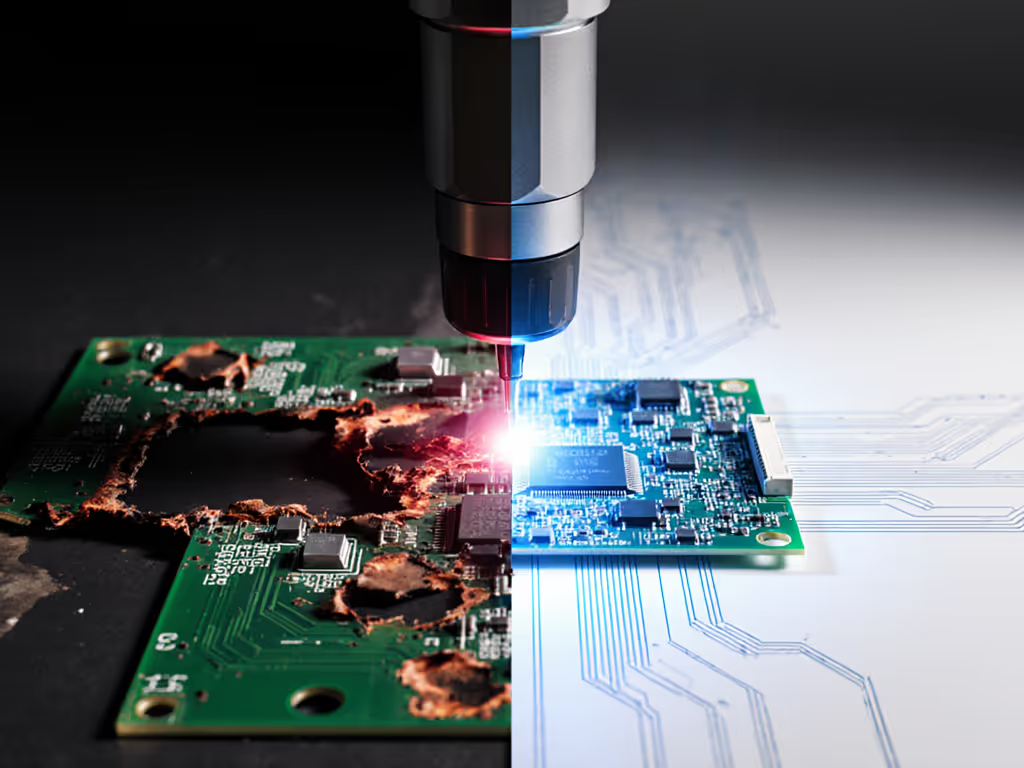
- Outcome: shielded drill wins on safety; slightly slower speed is irrelevant compared to preventing a $2K circuit board failure
Scenario 2: Countersinking 100 fastener holes in a telecom enclosure (mixed materials, 2-3 mm depth)
- Standard drill w/ regular charger: runtime ~45 holes before battery throttles; requires 2 batteries + 2-hour charge cycle
- EMI-shielded cordless (filtered charger, shielded battery): runtime ~40 holes, but no voltage sag or RF noise; emissions compliant throughout
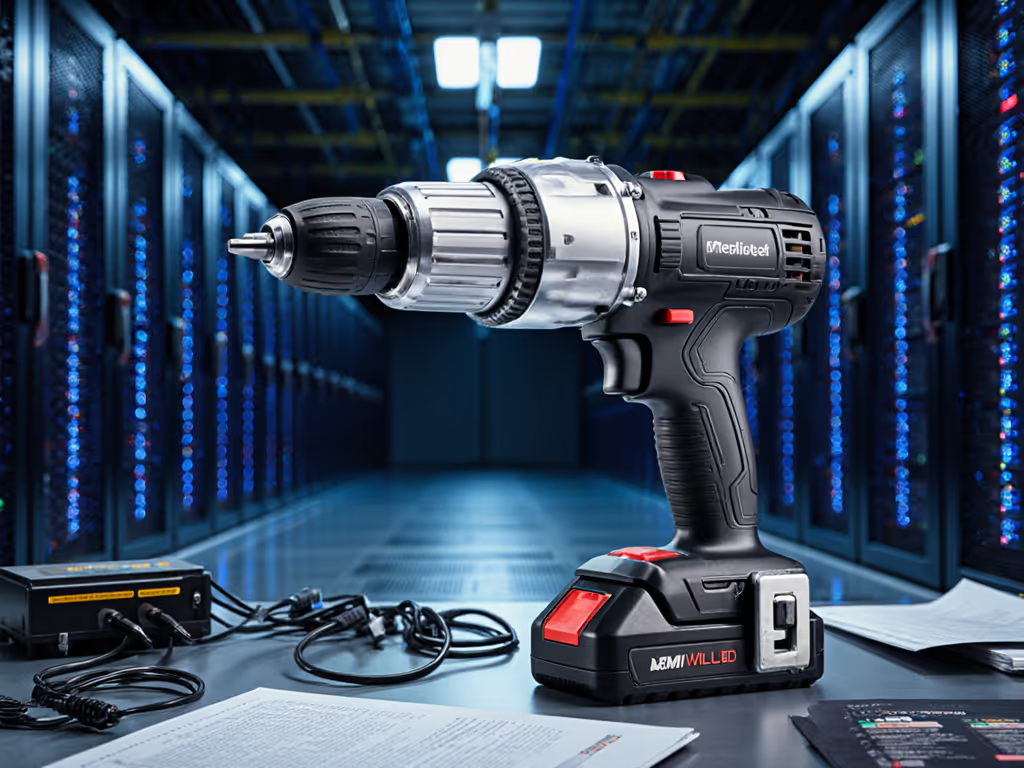
- Outcome: shielded system maintains clean power, which maintains compliance and consistency Working in data centers? See our server room drill comparison for EMI-safe picks and field tests.
TCO and Platform Thinking
If your role involves repeat cleanroom or electronic manufacturing projects, think in terms of a platform, not a one-off purchase:
- Corded EMI drill: $200-350, low running cost, no battery hassle, best for permanent workstations or short jobs
- Cordless EMI drill with shielded battery and filtered charger: $400-700, more flexible, but requires battery inventory and charging discipline
- Grounding accessories: wrist straps ($5-15), grounding cables ($10-30), ferrite clamps ($2-5 each)
- Chuck upgrades: precision Jacobs or ER chucks ($30-80) if your drill allows easy swap
- Bit assortment: carbide or coated bits rated for precision work ($50-100 for a good set)
Total investment for a single-person cleanroom toolkit: $500-1000. Over 3-5 years, that's $100-200 per year, less than the cost of replacing one damaged component assembly.
Conclusion: Confidence Through the Right Setup
Choosing an EMI-shielded drill isn't about buying the most expensive or feature-packed option. It's about understanding your project, matching it to a tool that prevents problems, and setting up that tool for success. Just as my neighbor built confidence by marking pilot holes, dialing the clutch, and choosing a compact, forgiving drill, you'll build confidence in sensitive environments by choosing the right platform (one designed specifically for the job) and maintaining it consistently.
Start with the project, then match the drill and batteries. Whether you're in a cleanroom, an electronics factory, or a precision lab, the goal is the same: deliver quality work without damaging what you're drilling into. The right EMI shielded drill comparison and setup does exactly that.
Further Exploration
Ready to dive deeper? Here's what to explore next:
- Ask your facility's quality or engineering team for specific EMI limits, compliance standards, and approved tool lists (don't guess)
- Request a demo or trial of a shielded drill on a non-critical task to feel the performance difference and test ergonomics
- Review ANSI/ESD S20.20 guidelines if your role involves ESD protection; they cover grounding, tool setup, and operator training
- Connect with others in your industry (via forums, user groups, or trade shows) to ask which platforms they trust and why
- Test under your specific conditions: temperature, humidity, material type, and hole depth all affect EMI performance and battery runtime
Your next project is the perfect moment to get this right. The confidence that comes from a setup that actually works (and prevents costly mistakes) is worth the upfront thought and investment.
Related Articles